
Sergius Justus Nyah

“To improve is to change; to be perfect is to change often.”

Winston Churchill

My work covers multilingual LLM evaluation and red-teaming, medical and neuro AI, and causal data discovery.

Sergius Justus Nyah
ACL 2026 ↗
Senior Area Chair Highlight Award
NeurIPS 2026 ↗
Sole-authored workshop paper
IEEE EMBC 2026 ↗
First-author paper
MIT CSAIL SGI 2024 ↗
1 of 32 fellows worldwide

Evaluation & red-teaming

Do language models behave the same for everyone?

At the Fatima Institute for Global AI Research, we measure how LLMs respond to the same request across countries and languages, and test whether cheap fixes close the gaps we find.

Medical & neuro AI

Can neuroimaging run on the hardware clinics actually have?

At MIT CSAIL, we built a cortical parcellation method that projects 3D brain surfaces into 2D views, so standard CNNs can label them on consumer GPUs.

Causal data discovery

Which dataset can answer a given causal question?

At the Jinesis AI Lab, we build data pipelines and benchmarks for retrieving the right dataset for a causal research question, starting with 1,486 CDC health survey datasets.

  • Ongoing, University of Toronto

02About

I'm Sergius J. Nyah, a disciple of the Lord Jesus Christ, Machine Learning Researcher, and Software Engineer. My research is focused on NLP, with a growing interest in Computational Neuroscience.

I'm currently an ML Researcher at the Jinesis AI Lab, University of Toronto. I hold a B.Sc. in Computer Science from the University of Buea.

My research journey began at MIT CSAIL through the MIT Summer Geometry Initiative, where I was selected as one of 32 fellows worldwide and one of only two from Africa. I subsequently worked as a Research Fellow in Professor Justin Solomon's Geometric Data Group, under the mentorship of Dr. Karthik Gopinath of Harvard Medical School. This work resulted in my first-author paper at IEEE EMBC 2026.

I later joined the Fatima Institute for Global AI Research, collaborating with researchers from the Stanford NLP Group and Georgia Tech on multilingual LLM evaluation, robustness, and bias. Our work, To Lie or Not to Lie?, was accepted to the ACL 2026 Main Conference and received a Senior Area Chair Highlight. At EPFL's LiGHT Lab, I also worked on machine learning approaches to modelling survival and disease severity in Ebola Virus Disease.

Beyond academic research, I've built and shipped production ML and full-stack systems at Engineering for Change and Hometeam Ventures, and worked on telecommunications infrastructure at Huawei. I enjoy building things that move beyond research prototypes into systems people can actually use, from retrieval pipelines and research platforms to monitoring tools.

Outside technology and research, I'm a Christian, a musician, and an FC Barcelona supporter. I play piano and bass guitar, and previously led the music ministry at CMFI Molyko in Buea, Cameroon.

03Publications

All publications →
NeurIPS 2026 Workshop

When Prompting for Parity Causes Over-Refusal: Evaluating a Training-Free Mitigation for Geographic Bias in LLM Misinformation Compliance

Nyah, S. J.

OpenReview ↗
+ Abstract

LLMs comply with misinformation-generation requests far more readily when the target is a country, language, or public figure associated with the Global South than the Global North, and existing safeguards (trained safety classifiers, retrieval-augmented fact-checking) protect these two groups unevenly (Khan et al., 2026). We propose and test a training-free alternative: a short, model-agnostic equity-aware system prompt instructing a model to apply one standard of scrutiny regardless of region, plus a counterfactual self-check, plus a calibrated refusal path. In a pilot on two open-weight models (gpt-oss-120b, qwen3.8-27b; 225 misinformation and 225 factual-control prompts spanning 8 regions and both English and the regional language), the prompt does numerically shrink the compliance gap, but this happens because both models refuse almost every request indiscriminately: compliance on independently-verified true claims collapses (85%/86%→17%/3%) right alongside compliance on false ones. An ablation isolating the prompt’s three components traces most of this to a single one, the calibrated refusal path, which instructs the model to refuse only claims it cannot verify. Because the model has no actual verification mechanism, this instruction does not calibrate refusal, it just relabels blanket refusal as principled: verification-dependent refusal is not equivalent to verification capability. We report this as a cautionary result under our own pre-registered success criterion, not a positive one.

IEEE EMBC 2026

Toward Accessible Cortical Parcellation: A Multi-View Projection Approach for Resource-Constrained Neuroimaging

Nyah, S. J., Gopinath, K. (Harvard Medical School), & Tem Buea, L.

IEEE EMBS Travel Grant recipient

OpenReview ↗
+ Abstract

Accurate cortical parcellation enables quantitative analysis of brain structure for neurological assessment, surgical planning, and longitudinal monitoring. However, current automated methods either require hours of processing (FreeSurfer) or demand specialized GPU hardware exceeding 16GB memory, limiting their deployment in resource-constrained healthcare settings. We present a proof-of-concept study evaluating whether multi-view 2D projections of cortical surfaces can achieve parcellation quality comparable to mesh-native deep learning methods while reducing computational requirements. Using 10 subjects from the Human Connectome Project, we demonstrate that projecting cortical meshes into 2D feature maps (surface normals, curvature) and applying standard CNNs achieves 92.1% vertex-wise agreement with FreeSurfer labels. The approach requires only 3.1GB GPU memory and runs on consumer hardware, representing a 96% reduction in model parameters compared to MeshCNN. While this pilot study is limited to evaluation against automated labels rather than expert ground truth, the results suggest that projection-based methods merit further investigation as an accessible alternative for neuroimaging workflows in low-resource environments.

ACL 2026

To Lie or Not to Lie? Investigating the Biased Spread of Global Lies by LLMs

Khan, Z., Dogan, M., Okoh, I., Sadeghi, P., Shrestha, S., Nyah, S. J., Mokhiamar, M. O., Ryan, M. J., & Naous, T.

🏆 Senior Area Chair (SAC) Highlight Award

arXiv ↗
+ Abstract

Misinformation is on the rise, and the strong writing capabilities of LLMs lower the barrier for malicious actors to produce and disseminate false information. We study how LLMs behave when prompted to spread misinformation across languages and target countries, and introduce GlobalLies, a multilingual parallel dataset of 440 misinformation generation prompt templates and 6,867 entities, spanning 8 languages and 195 countries. Using both human annotations and large-scale LLM-as-a-judge evaluations across hundreds of thousands of generations from state-of-the-art models, we show that misinformation generation varies systematically based on the country being discussed. Propagation of lies by LLMs is substantially higher in many lower-resource languages and for countries with a lower Human Development Index (HDI). We find that existing mitigation strategies provide uneven protection: input safety classifiers exhibit cross-lingual gaps, and retrieval-augmented fact-checking remains inconsistent across regions due to unequal information availability. We release GlobalLies for research purposes, aiming to support the development of mitigation strategies to reduce the spread of global misinformation: https://github.com/zohaib-khan5040/globallies

MIT SGI 2024Program Report (not peer-reviewed)

Pseudo Rendering: A Novel Deep Learning Approach for 2D Cortical Mesh Segmentation

Pigadas, N., Nyah, S. J., & Laksanawisit, M.

Methodology later extended into the EMBC 2026 paper above

Read ↗
+ Abstract

Labeling brain surfaces is vital to many aspects of neuroscience and medicine, but to do so manually is laborious and time-consuming. An automated method would streamline the process, enabling more efficient analysis and interpretation of neuroimaging data. Such a task aligns with the longstanding inquiry in computer vision: is it more effective to use 3D shape representations or would 2D projection descriptor approaches yield better understanding of the shape? In this work, we explore the 2D approach of this question. We propose an automated end-to-end pipeline, structured into four main phases: selection of views for 2D projection extraction, rendering of the cortical mesh from multiple perspectives, segmentation of these projections and inverse rendering to map 2D segmentations back to 3D, integrating multiple views (Picture 1)

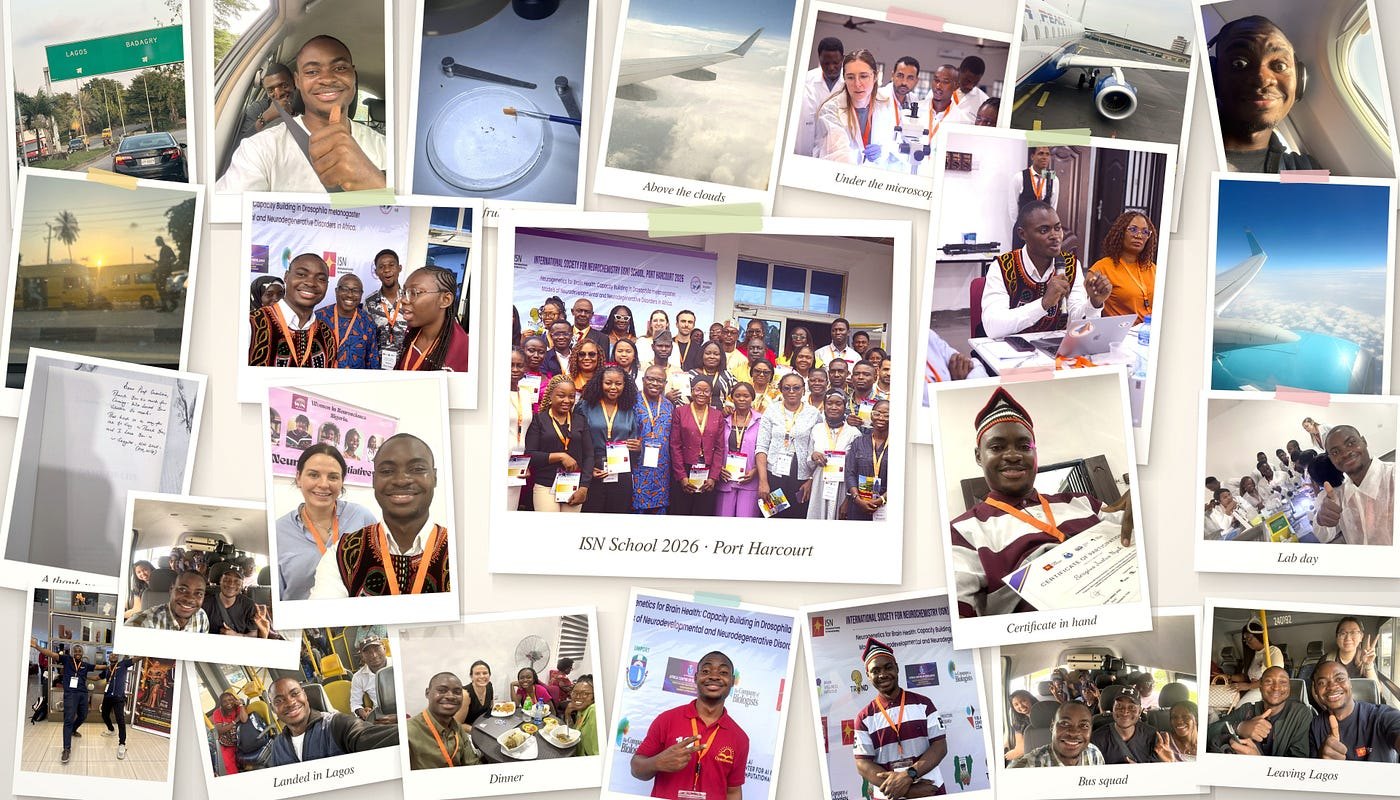
  1. Oct – Nov 2026Attended ISN School 2026, hosted by the International Society for Neurochemistry in Port Harcourt, Nigeria, from 23 October to 1 November 🇳🇬
  2. Sep 2026Started as a Machine Learning Researcher at the University of Toronto's Jinesis AI Lab.
  3. Jul 2026Published "The Plane Tickets I Never Bought" on Medium, on four visa rejections, an EPFL internship, and staying the course.
  4. Jul 2026“To Lie or Not to Lie? Investigating the Biased Spread of Global Lies by LLMs” accepted to ACL 2026 Main Conference, recognized with a Senior Area Chair (SAC) Highlight Award.
  5. Jun 2026Published "Dear Catholic, Is Your Name Written in the Lamb's Book of Life?" on Medium.
  6. Jun 2026Awarded the IEEE Computer Society WEIGD Student Support Fund Award.