My Experience at the ISN School 2026: Highlights from Lagos and Port Harcourt, Nigeria 🇳🇬
From the Vibrant Streets of Lagos to the Provictoire Research Hub
Life has inevitable ups and downs that test our strength, shape our character, and give meaning to our journey, and sometimes it isn’t until we get knocked down that we find which way is up, nor until the sky clouds over that we notice the light, nor until we lie in the gutter that we begin to see the stars. After tons of visa rejections this year and missed travel opportunities, this trip to Nigeria came as a reminder and encouragement to me that God still cares, that He still decides, and that He alone has the perfect plan. All Glory to His Name!
Dear Reader, E káàárò, E káàsán, or E kú ìrọ̀lẹ́, depending on when you’re reading this! 😍
Come along with me as I share my experience at the International Society for Neurochemistry/ Neuroscience School 2026! E se! (You should probably learn some Yoruba after reading this :) 🙏🏾
General Overview
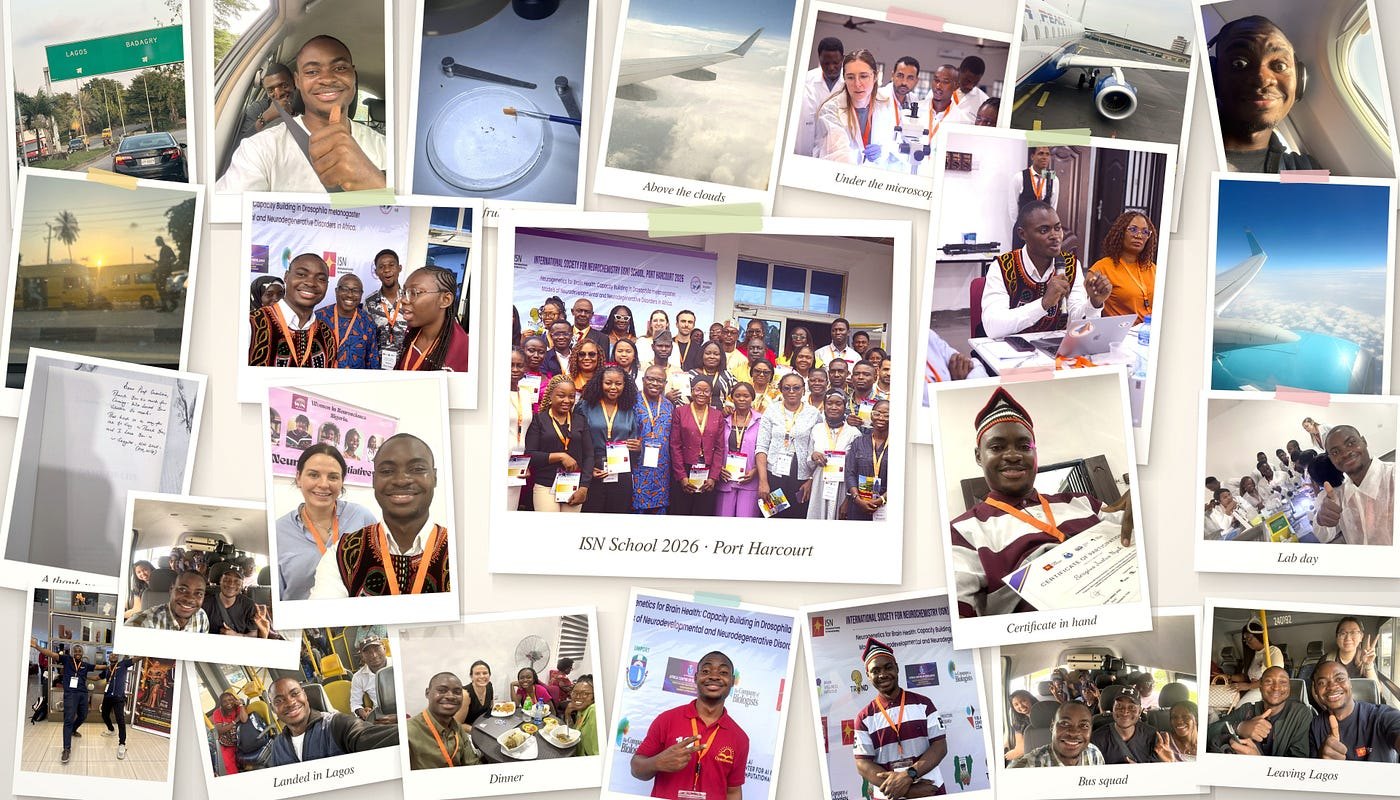
From October 23rd to November 1st, I was in Lagos and Port Harcourt, Nigeria 🇳🇬 for the International Society for Neurochemistry (ISN) School 2026. The theme was a long one (I barely understood it till I got there haha): Neurogenetics for Brain Health: Capacity Building in Drosophila melanogaster Models of Neurodevelopmental and Neurodegenerative Disorders in Africa. It was held at the Provictoire Research Hub, University of Port Harcourt, with support from ISN, TReND in Africa, The Company of Biologists and other partners.
Now, here is the funny part. I am a computer scientist. Most of my research so far has been in Machine Learning. However, when I came across this opportunity on LinkedIn, I had no idea what it was, yet I sensed it was Neuroscience-related. By some turn of events, I had worked on a Neuro-related project at MIT SGI 2024, I mean, we even published a paper at IEEE EMBC, so I’m up to the task (told myself!)
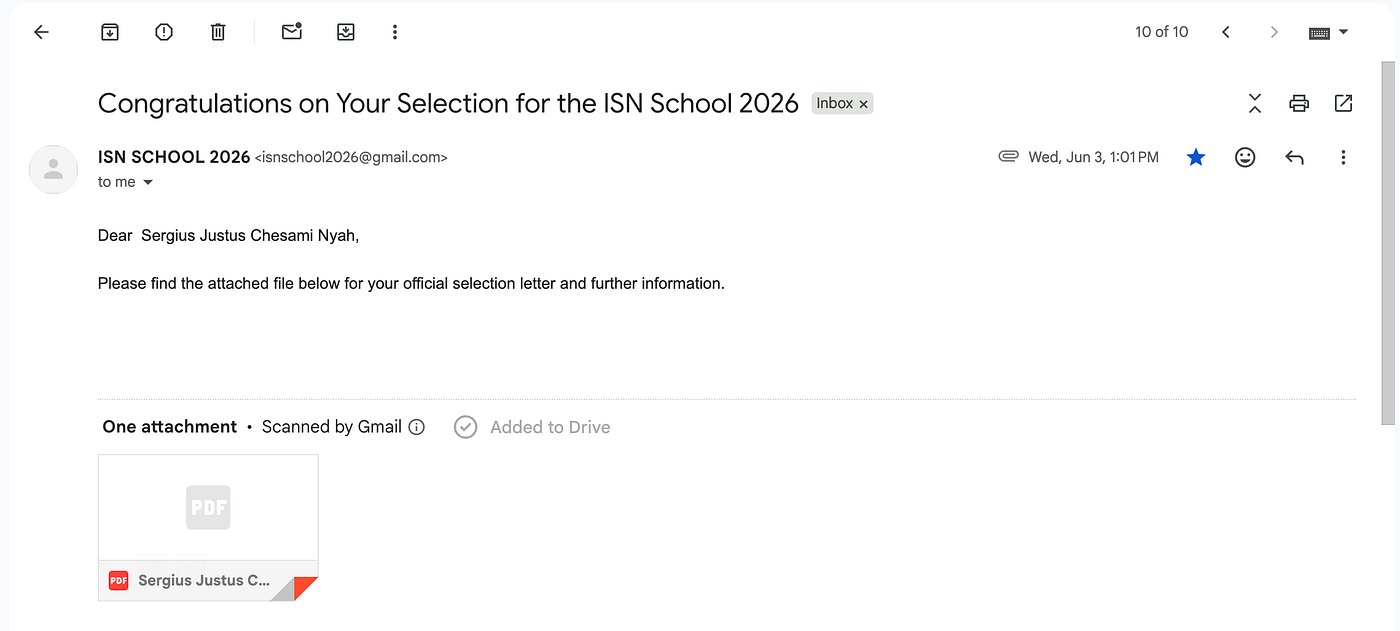
So I proceeded to apply (who knows?). We have a slogan at Open Dreams that says “Spare no Opportunity”. So “No harm applying right?”, I told myself. I shot my shot faintly, and behold, I got the acceptance letter in June, fully funded to Port Harcourt, Nigeria. At the time, it didn’t mean a lot to me, as going to Switzerland for my EPFL internship was all over my head, so what do you mean Nigeria? 😂 Well, I shared it with my Mom and kept it low-key for quite some months.
Travel Experience ✈️
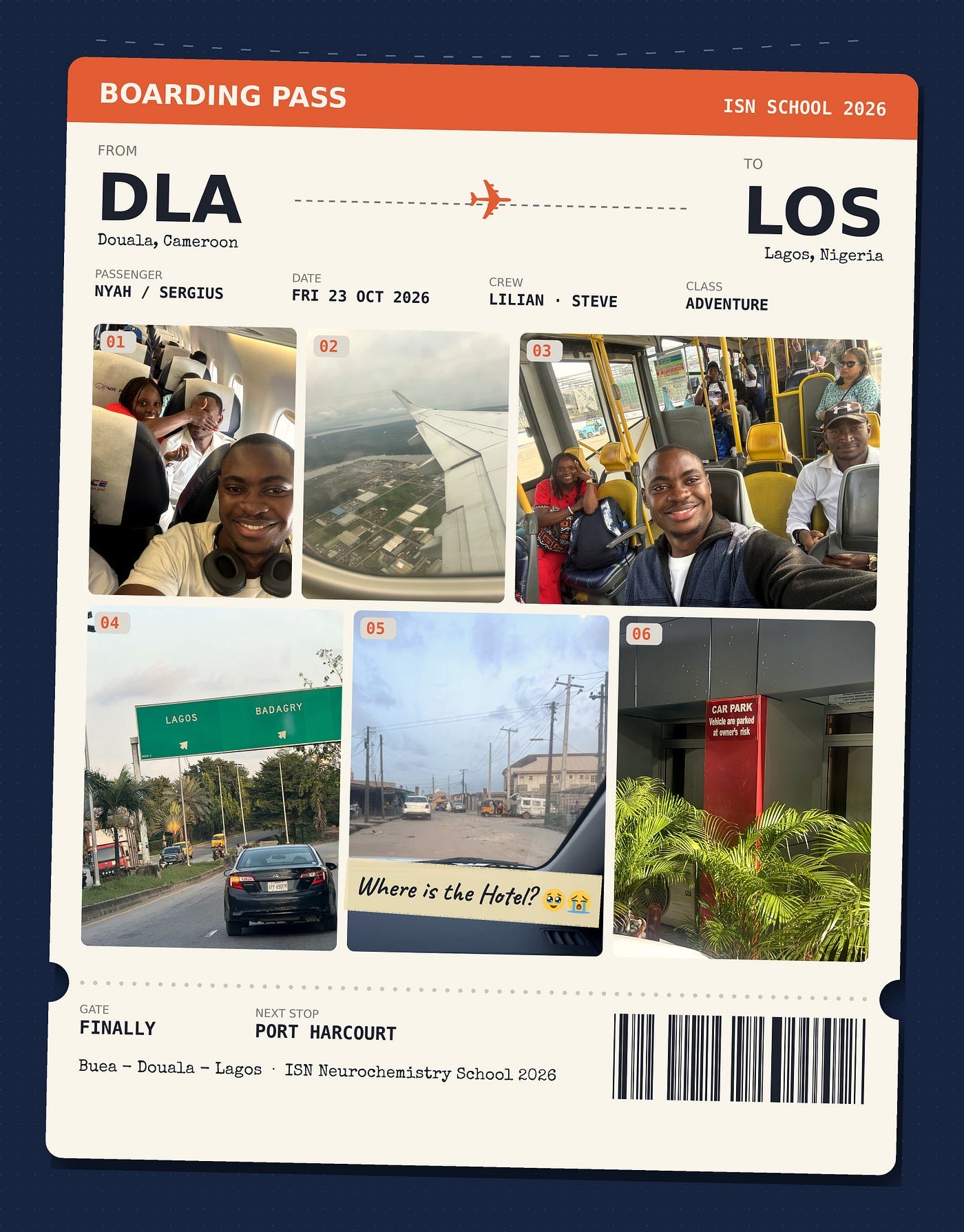
After months of interesting happenings and days of preparations, I left Buea on Friday, 23rd October for Douala, where I met two colleagues heading to the same school, Lilian and Steve. From Douala, we flew to Lagos.
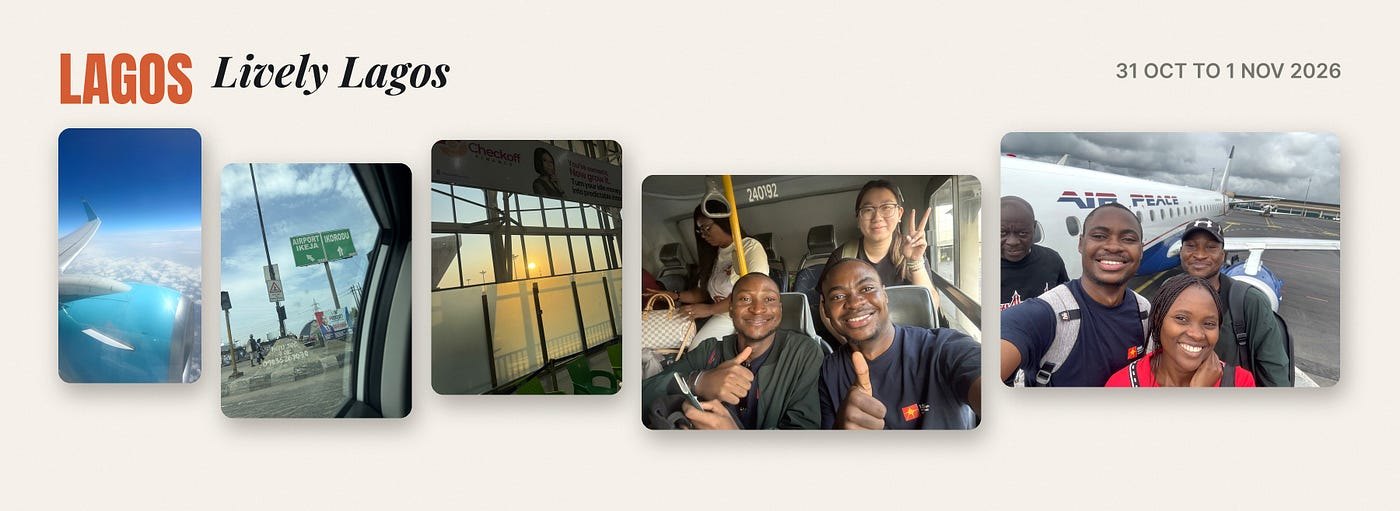
Lagos welcomed us the Lagos way: Currency exchange cashiers pulling us left and right 😂, yellow danfo buses everywhere, broad roads, and a sunset that painted the whole road gold. Then came the adventure. We spent more than two hours looking for our lodging at Medilag, UNILAG. At the start, it was more of “exploring Lagos”, but by the time we had spent two hours, things weren’t funny anymore omoo. Tired, hungry, and a little lost, we finally found it! Looking back, it was the perfect first lesson for a research school. You rarely find the right place on your first try. 😅
Lagos to Port Harcourt
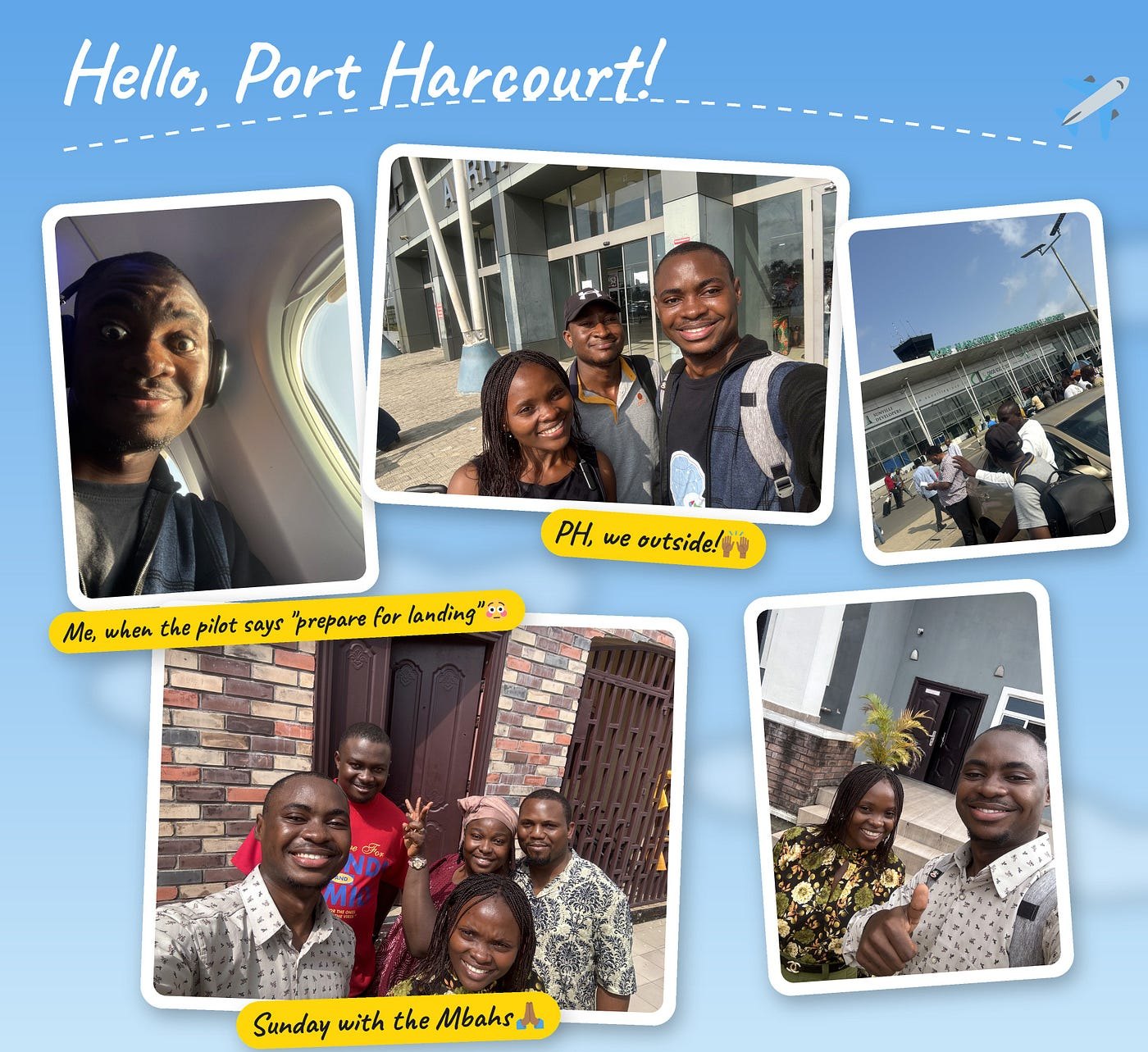
The next morning, we left for Port Harcourt at 7am, and man, we almost missed our flight! I got up around 5am, quite tired, confused, and anxious, amidst the hotel manager’s hot tea. By God’s grace, we made it, and on Saturday 24th October around 9am, we landed in Port Harcourt Int’l Airport (the Garden City!). The organizing team received us warmly and took us to our lodging.
That Sunday, I worshipped with our Missionaries in PH, who happen to be my soon-to-be “in-loves” (didn’t tell you anything 😂). What a blessing!
After meeting with other participants and faculty from across the globe, we proceeded to our rooms, welcomed our roommates, had some smoked Jollof and lots of fun, then went to bed quite early (never me), to prepare for the long-anticipated Day 1!
The Actual Learning 🧠🪰
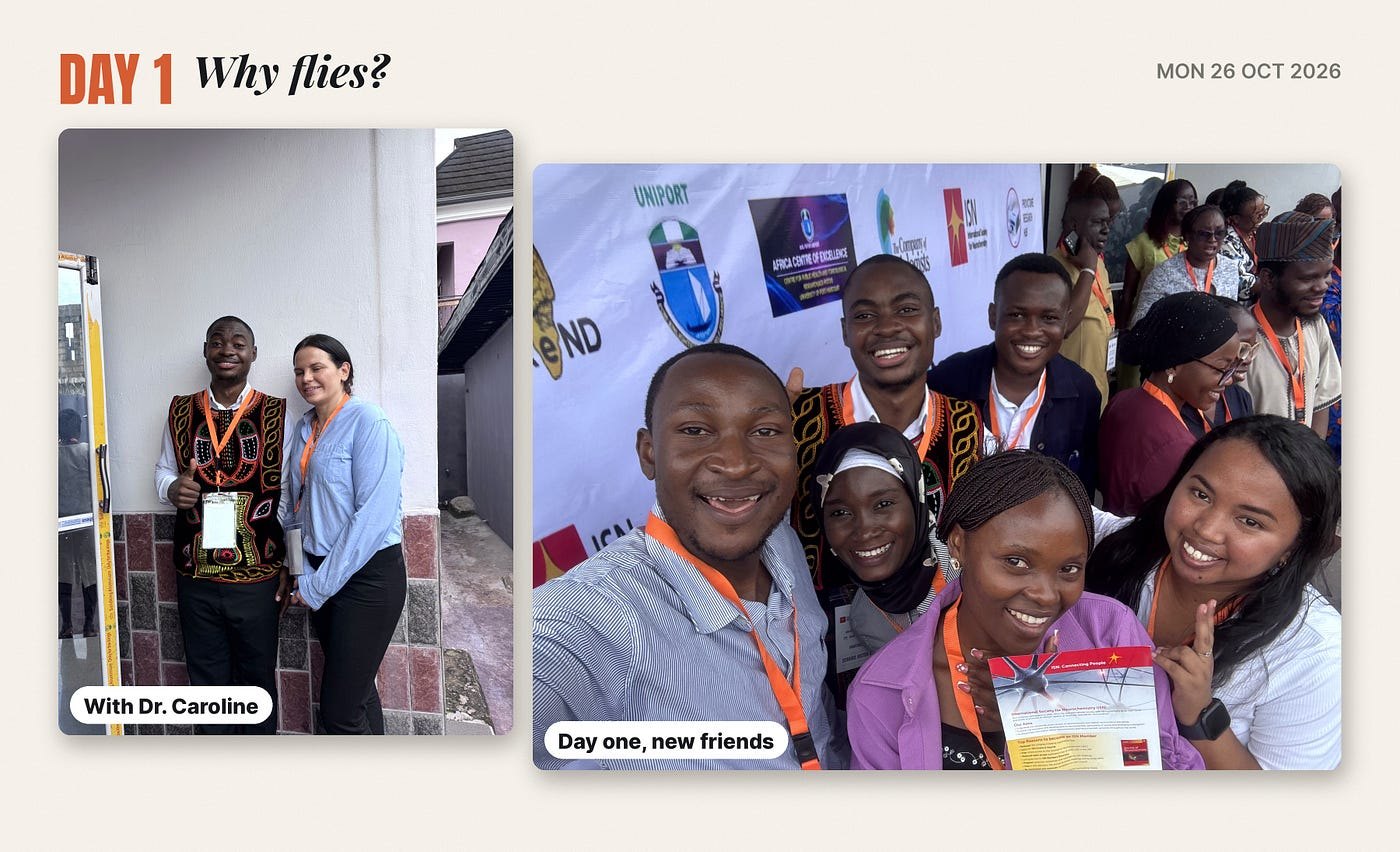
Day 1 (Monday): Why flies? The program opened with Prof. Amadi Ihunwo on the history of ISN and its funding opportunities, then the opening keynote by Prof. Cahir O’Kane from Cambridge University on building research capacity with Drosophila. One line from his talk stuck with me: for a genetic disease, identifying the gene is only the entry point to the answer. Hmm!
Next, Dr. Olasunmbo Afolayan introduced us to the fly itself. Did you know Drosophila means “dew-loving”, and melanogaster means “black-bellied”? I didn’t either haha. The fly is cheap to keep, has loads of offspring, and lives a short life, so age-related changes can be studied in weeks. It also carries counterparts of human disease genes like PINK1, parkin and LRRK2. Of course, flies have limits too. They lack some human genes and the complexity of our brains, so findings, no matter how mind-blowing, must still be validated in mammals. As someone who builds ML models for a living, I found that honesty refreshing. Every model has its boundaries.
Then came one of my favourite talks of the week, by my favourite faculty, Prof. Caroline Palavicino-Maggio from Harvard Medical School, on behavioural assays and aggression in flies. Yes, flies fight! They lunge, they fence, they chase each other, and serotonin, dopamine and octopamine shape how hard they go at it. In the afternoon, we got our hands busy: handling fly cultures, setting up genetic crosses, and running aggression, locomotion and courtship assays ourselves.
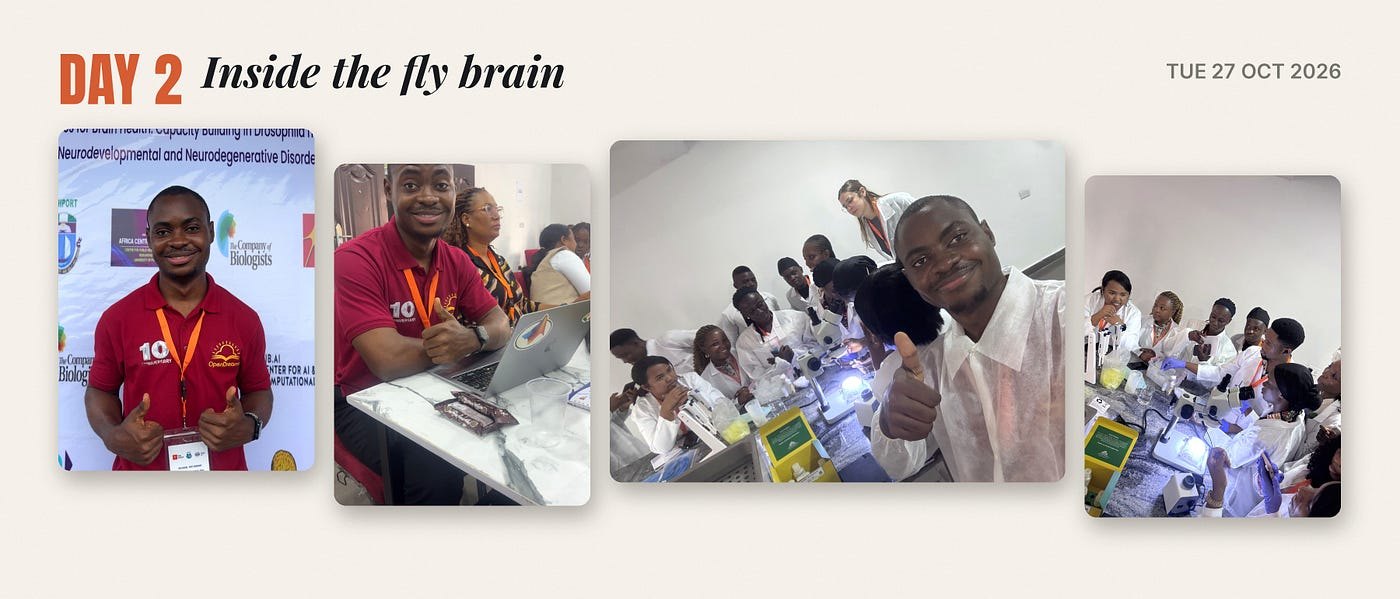
Day 2 (Tuesday): Inside the fly brain. J. Douglas Armstrong and Robbie Court introduced the Virtual Fly Brain, a digital reconstruction of the Drosophila brain where you can explore the mushroom bodies (learning and memory), the antennal lobe (sensory processing) and the wiring between neurons. Niklas Kempynck covered omics and epigenetics, Prof. Caroline PM took us through the molecular toolkit (GAL4/UAS, RNAi and CRISPR-Cas9), and André Maia Chagas made a strong case for open science and open hardware. The afternoon was all hands on deck: PCR and primer design, genomic DNA extraction and, wait for it, fly brain dissection! Also got the chance to represent our Open Dreams family!
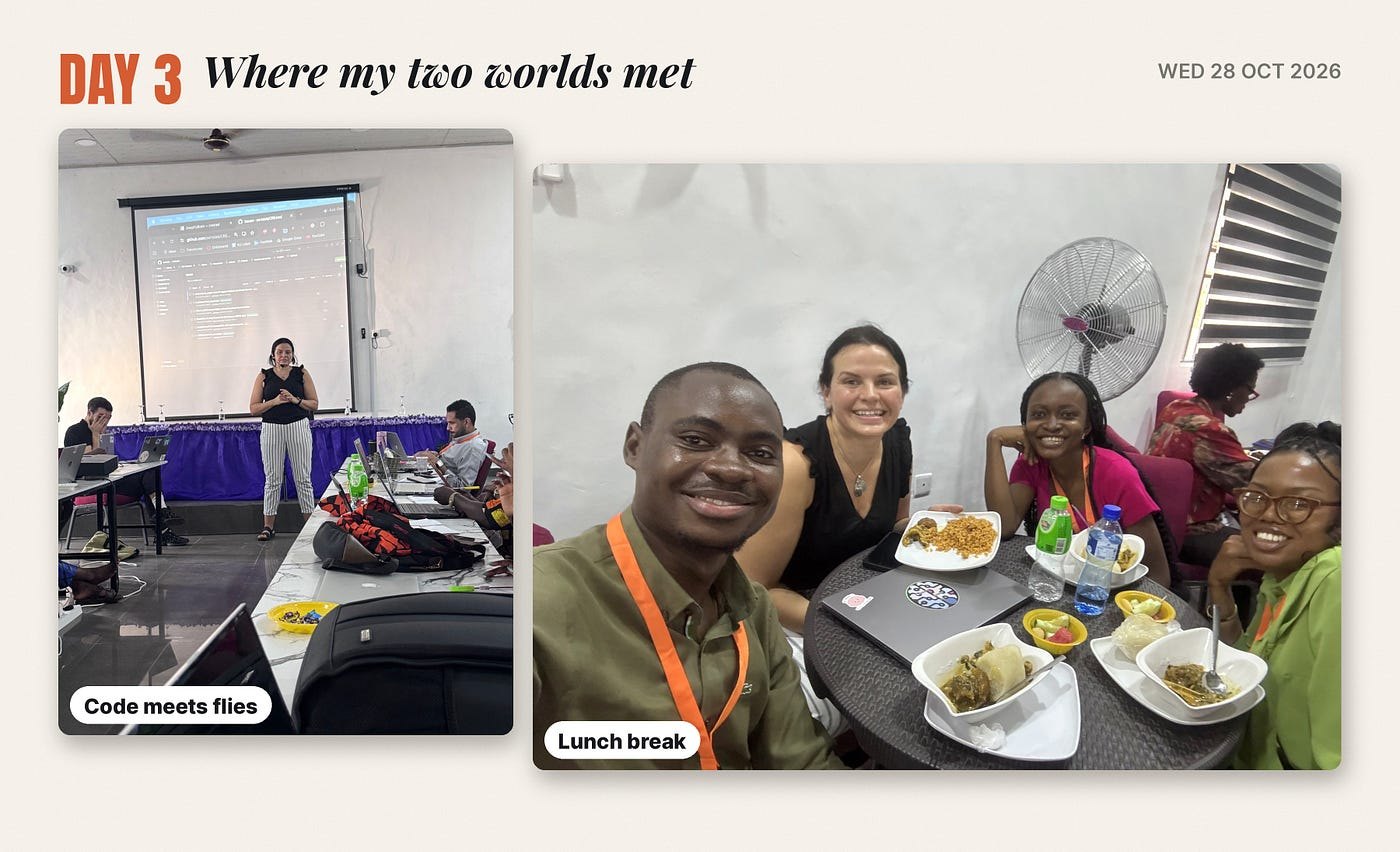
Day 3 (Wednesday): Where my two worlds met. Dr. Lucia Prieto Godino, founding director of TReND in Africa, spoke on comparative connectomics and how genetics and computational neuroscience can work hand in hand. Then Niklas Kempynck took us through public neurogenomics repositories and deep learning on enhancers, the stretches of DNA that help decide what a neuron becomes. That afternoon, we analysed public fly omics datasets, explored circuits with neuPrint and modelled enhancers with CREsted. For the first time all week, I was on familiar ground! I could finally see how my computational work fits right next to the bench. That was my “Aha” moment.
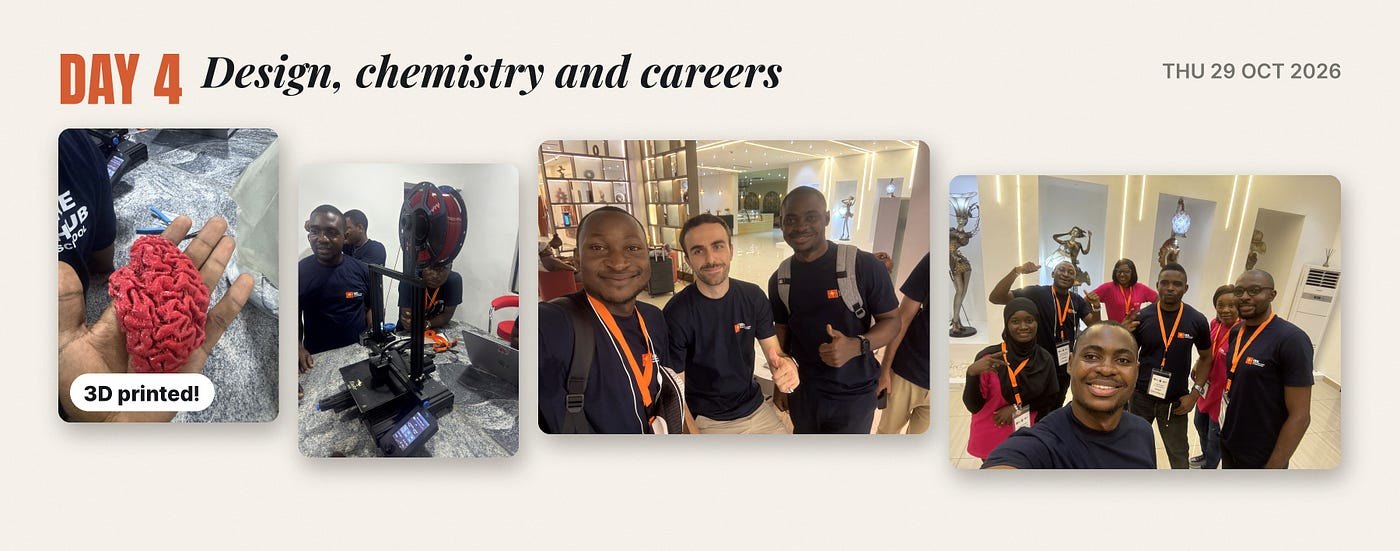
Day 4 (Thursday): Design, chemistry and careers. Prof. Amos Abolaji spoke on experimental design in fly neurotoxicology. Then Prof. Orish Ebere walked in and asked us, “What in life is not chemistry?” Cells communicate, he said, and they speak through chemicals. Much of disease comes back to oxidative stress, inflammation and energy. He also challenged us straight up: much of African research stays descriptive, meanwhile we need more mechanistic studies that go deep enough to explain why. Could that be the reason African research barely leaves the continent? Well, it got me thinking. The day closed with sessions on grant writing and mentorship, plus a 3D printer practical.
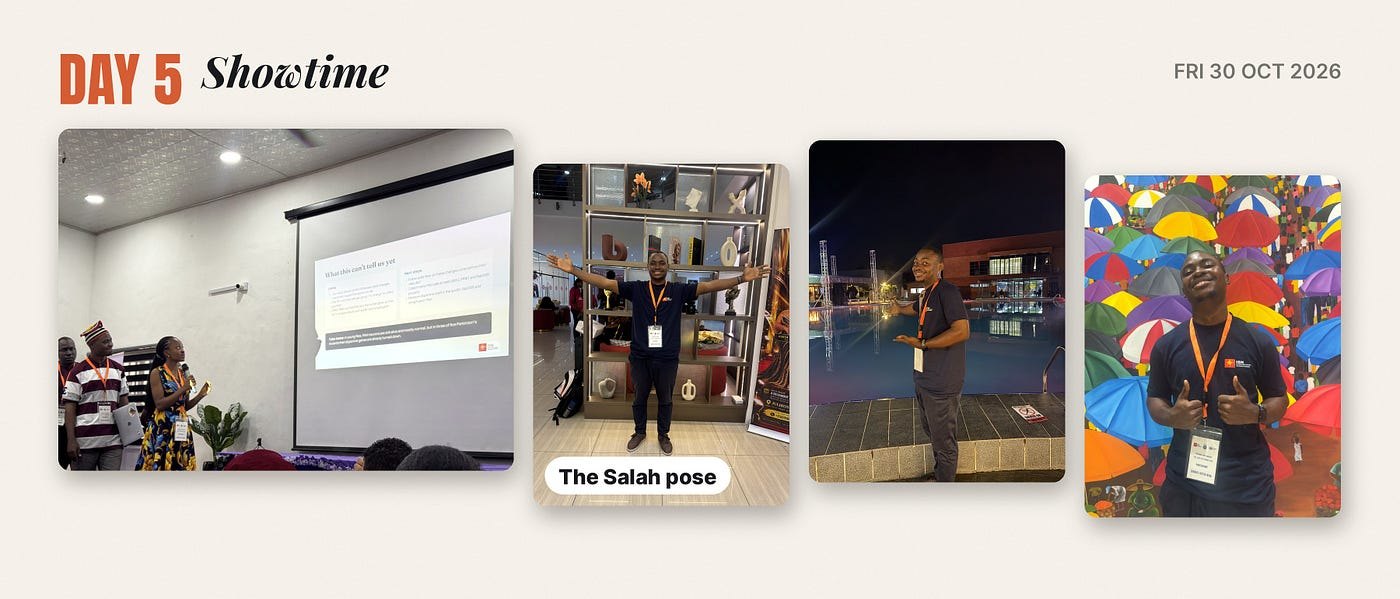
Day 5 (Friday): Showtime. The final day held the student presentations and a panel on building a sustainable African neurogenetics ecosystem, bringing together neurogenetics, bioinformatics and ML (my favourite triad haha). Then came the city tour, the award celebration and the closing dinner.
Our Group Project
My group worked with the Pech et al. (2025) dataset of Drosophila models of Parkinson’s disease. Our question was simple to ask, but hard to answer: are the PAM dopaminergic neurons already affected in young mutant flies before the disease shows itself? Our findings were both shocking and a bit medically surreal. The flies died even before their PAM dopaminergic neurons showed damage in the auxilin and synaptojanin mutants. Shout out to the other Doctors and Odogwus on the team like Dr. Samuel, Dr. Beryl O., Dr. Ruth J, Peace C, Princess Adaeze, and many more!
The People, Conversations, and Connections
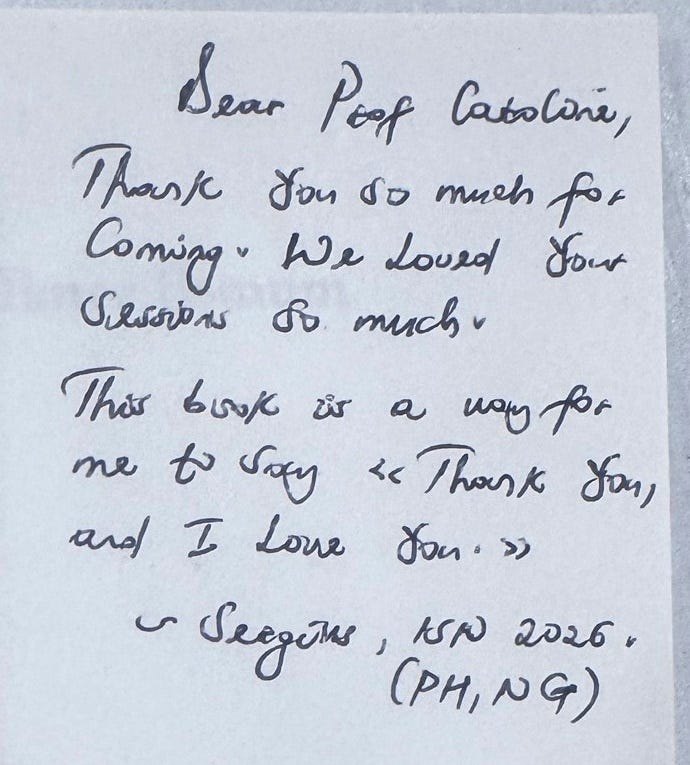
If you ask me what I loved most, it was the people. The faculty were so generous with their time. Prof. Caroline Palavicino-Maggio told us that “science is persistence, resilience, and having a drive.” Before I left, I gave her a copy of The Game of Life, by Professor Zacharias Tanee Fomum, with a short handwritten note to say thank you. 🙂 This is but the tip of the iceberg. All Glory to God!
Prof. Chinna Orish described research as doing things when you don’t yet know what you’re doing (relatable, right?). Dr. Aloba Fisayo left us two lessons I wrote down immediately: start now, where you are, and never disdain your background, because your background could be your lift to the next opportunity. Someone else put it more bluntly, and the whole room burst into laughter: after a certain age, you stop saying “I come from a poor background.” You become the background! 😂
Lively Lagos! 🌆
On Saturday 31st October, we flew back from Port Harcourt to Lagos, and that flight gave me some of the best views of the whole trip: deep blue sky sitting over a white sea of clouds. Picture it! Once we landed in Lagos, I rushed off to spend the evening with a former colleague who has since become someone quite special to me. She showed me one of Lagos’s brightest sides. This was literally my best day in Nigeria! 🙌🏾, to the point that I was reluctant to leave! (sobs)
Ileri, mo dúpẹ́ fún gbogbo rẹ! 😊️ (You know the rest :)
On Sunday 1st November, we flew from Lagos back to Douala with watery eyes! (You know what this means).
Practical Lessons from ISN and Research in General
- Always go mechanistic. Describing what happens is the start. Explaining why it happens is what moves a field forward. This applies to just about every research question.
- One good question can go very far. We were told one solid research question can lead to more than a dozen publications. The skill is in how you handle the data. Moreover, well-handled data can fetch you a dozen more publications still. Meaning asking many questions the right way + handling data well significantly bump your research publications.
- Be audacious. Research is doing what you don’t know. Start things. Try things out. Dare!
Want to Go Next Time? My Application Tips 💡
I promised myself this blog would not just be me flexing photos haha. So here is how you can land a school like this one next season.
- Know where to look. Most calls drop on LinkedIn, mailing lists and opportunity sites months before the school. Follow ISN, TReND in Africa, IBRO and The Company of Biologists, and check Opportunity Desk every week. I found ISN on LinkedIn!
- Don’t rule yourself out. I am a computer scientist, and I still got into a neurochemistry school. If your background is different, show the bridge: what you bring to the room, and what you want to take back.
- Be specific in your motivation letter. Name the topics, techniques or faculty that pulled you in, and say what you will do with them afterwards. For example, learning fly brain dissection so you finally understand where your data comes from.
- Ask your referees early. Give them at least two weeks, plus a short note on the school and what you would love them to highlight.
- Look for full funding and travel grants. Many of these schools cover flights, lodging and feeding. If yours does not, try the Company of Biologists Travelling Fellowships or IBRO grants.
- Start your visa early. The moment the acceptance letter lands, start the process. Trust me, after this year’s rejections, I know how much time matters.
- Once you are in, show up fully. Ask questions, talk to faculty over lunch, take notes and photos, and follow up afterwards on LinkedIn or by email.
Where to find the next one 👇🏾
- ISN Advanced Schools and the ISN Schools Initiative
- TReND in Africa courses (neuroscience, Drosophila, open hardware and more)
- IBRO Schools and the IBRO African Centers for Advanced Training in Neuroscience
- IBRO-Simons Computational Neuroscience Imbizo in Cape Town (perfect if you code like me)
- CAJAL Advanced Neuroscience Training courses
- Neuromatch Academy (online: computational neuroscience, NeuroAI and deep learning)
- The Company of Biologists Travelling Fellowships
- MIT Summer Geometry Initiative (where my neuro journey started)
- Deep Learning Indaba (for my ML people)
- Opportunity Desk (fresh opportunities every week)
Got questions? Drop a comment or send me a DM. Happy to help! 🙌🏾
Gratitude and Conclusion 🙏🏾
My deepest gratitude goes out to God Almighty, for His unfathomable protection, love, mercy, and favor, to my family and army of friends for their unwavering support, to my Cameroonian colleagues at the ISN (Steve and Lilian) who helped me navigate things easily, and to every single person who made the ISN School worth remembering. I’m profoundly grateful! ❤️
A big thank you to the International Society for Neurochemistry, TReND in Africa, The Company of Biologists, the Provictoire Research Hub and the University of Port Harcourt for making this school possible. To every lecturer and the host of organizers, I’m grateful!
Somewhere in my notes from that week, I wrote this: “Sometimes I zoom out, look at myself, and get scared about the future. Oblivious. Empty. Untouched. I ask, afraid, “What will I be?” Then it hit me. We don’t just be. We become. Everyone gets to write their own future. So what are you writing?
Your pen. Your paper. Your future. Your choice.”
Thank you so much for reading! Hope you learned a thing or two!
A dúpé! 🙏🏾